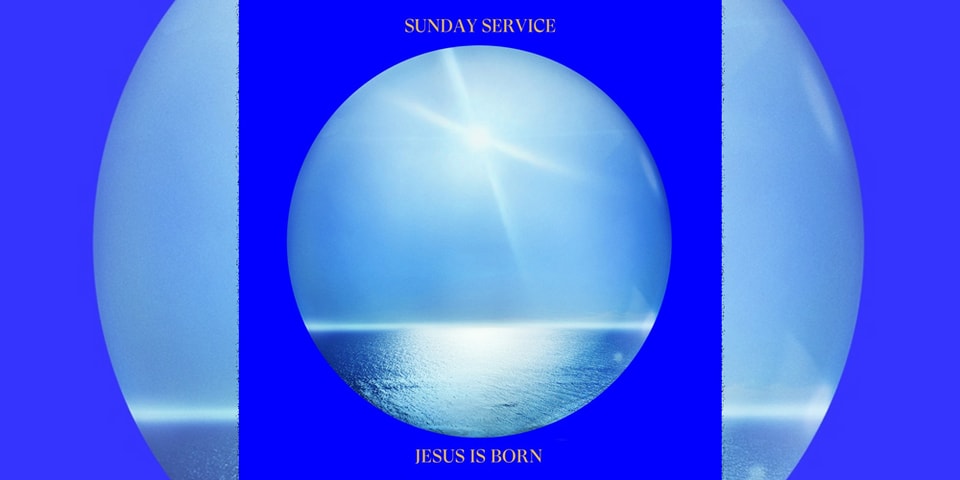
In an insightful Zane Lowe interview from back in October, Kanye West revealed plans to follow up Jesus Is King with the release of a Sunday Service Choir album, titled Jesus Is Born. Merry Christmas: the album actually dropped on the intended day of the release (Christmas Day), unlike Kanye’s previous album releases.
Measuring at around an hour and 24 minutes, Jesus Is Born sees a total of 19 tracks, a number of which include songs that Ye and the choir performed live, like “Ultralight Beam,” “Father Stretch” and “Follow Me – Faith.” For this album, Ye went easy on the instrumentals, making sure the arrangements were minimal so that the main focus would be on the choir’s rich vocals.
Kicking off the album is the track “Count Your Blessings,” which starts off with a bluesy piano lick, joined immediately by the grand, regal sound of Ye’s choir. It sets the tone for the rest of the album, packing a series of vibrant, soulful vocal deliveries one track after another. Songs like “Revelations 19:1” and “More than Anything” take on a slower ballad-like feel, while other tracks like “Sunshine” have a more upbeat funk-tinged groove, demonstrating how wide and dynamic the sound of gospel choirs can be. This past year, Kanye has kept busy with his choir, hosting gospel services, across the country in various churches and venues — he even brought the choir to Coachella 2019 in April. It seems he’s showing no signs of slowing down, especially with the recent operas he’s been performing.
Scroll below to listen to the latest album from Kanye West’s Sunday Service Choir Jesus Is Born
I’ve never actually sat down and ranked the Star Wars movies before. Star Wars: The Rise of Skywalker earned $20.074 million on Tuesday for a $226.847 million five-day total and a global cume of around $481 million as of last night. Since it should be passing $500 million by the end of this sentence, why not today? A few disclaimers: This will only deal in theatrical released (sorry Ewoks) and live-action (the Clone Wars movie had to die so that the Clone Wars TV show could live forever) Star Wars films.
It is worth noting, without getting into “Star Wars fatigue” or any such thing, that we’ve had five Star Wars movies from Walt Disney in just four years, nearly doubling the six that were available prior to the release of Star Wars: The Force Awakens in December of 2015. That’s a conversation for another day. For now, here’s the objectively correct ranking, determined by science, math and dark sorcery, of the eleven live-action, theatrically released Star Wars movies.
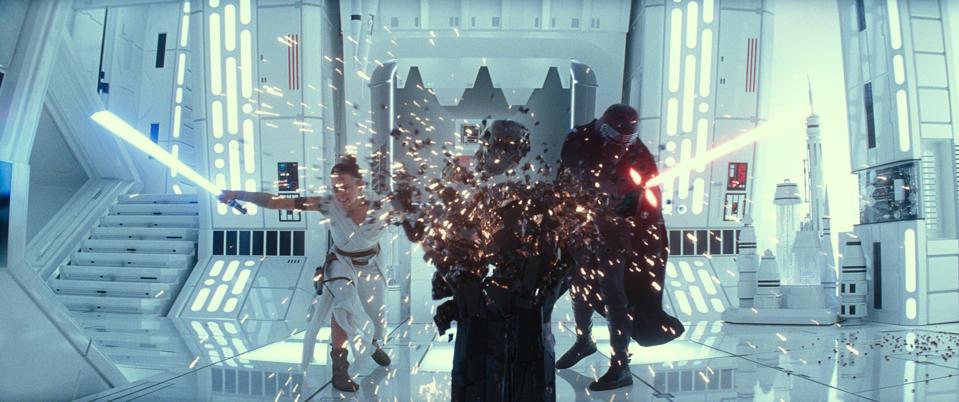
Daisy Ridley is Rey in STAR WARS: THE RISE OF SKYWALKER
(c) 2019 and TM Lucasfilm Ltd. All Rights Reserved.
The Rise of Skywalker(2019)
Budget - $250 million
Domestic Box Office: $207 million-and-counting
Worldwide Box Office - $434 million-and-counting
Imagine if Batman Returns had been followed not by Batman Forever but by Batman & Robin. Imagine if Justice League spent most of its running time bouncing from one arbitrary action sequence to another and retconning plot reveals and character arcs from Batman v Superman. It’s not just that the movie walks back both Rian Johnson’s Last Jedi and JJ Abrams’ own Force Awakens while negating the entire story arc of Return of the Jedi, it’s that it spends so much time doing those things that it has no time for character interaction, forward plot or thematic coherency. It’s not much fun, it’s aggressively bad and it exists for no purpose beyond reassuring the older fans of the original Star Wars trilogy that they are still the most important fans of all.
'Star Wars Episode II Attack of the Clones'
Fox and Lucasfilm
Attack of the Clones(2002)
Budget - $115 million
Domestic Box Office: $311 million
Worldwide Box Office: $649 million
George Lucas may have brushed off talk of Phantom Menace being a disappointment, but Episode Two is clearly a reaction. As such, we have arbitrary action sequences, Padme sounding, looking and dressing more conventionally attractive and a comparative lack of controversial supporting character Jar Jar Binks. The core romance between Anakin Skywalker and Senator Amidala makes sense (it’s two sheltered young adults trying to approximate courtship) but still comes off as awkward and unromantic. Obi-Wan’s film noir side-plot is hampered by a stiffness in the storytelling. Coming half-a-year after Harry Potter and the Sorcerer’s Stone and The Fellowship of the Ring, Attack of the Clones lacks those films’ emotional oomph, but the final 40 minutes has a “get off my lawn” showmanship that redeems it as top-tier blockbuster spectacle.
Daisy Ridley and John Boyega in 'Star Wars The Force Awakens'
Disney and Lucasfilm
The Force Awakens(2015)
Budget: $245 million
Domestic Box Office: $937 million
Worldwide Box Office: $2.068 billion
It’s a structural remake of A New Hope, to where specific plot beats (like Han Solo’s death) lose their impact because they are just following the plot outline of Star Wars. Ditto the painfully vague world-building, which negates the triumph of Return of the Jedi while offering little context for the new status quo to return the world (and the returning heroes) to their Episode IV status quo. The film looks great, it’s relatively well-paced and the new characters (Rey, Finn and Kylo) make it sing. I was down on it four years ago because I saw the writing on the wall for Hollywood franchises, I became more forgiving after The Last Jedi, but am now doubly grumpy now that I see what Abrams and friends apparently had in mind the whole time.
Natalie Portman, Liam Neeson, Jake Lloyd and Ewan McGregor in 'Star Wars Episode One: The Phantom ... [+] Menace'
Fox and Lucasfilm
The Phantom Menace(1999)
Budget: $115 million
Domestic Box Office: $474.5 million
Worldwide Box Office: $1.027 billion
Unquestionably successful both commercially (it was the second-biggest global grosser behind Titanic by the end of its initial theatrical run) and culturally (it introduced an entire generation to their own Star Wars story), this first Star Wars prequel feels the most like an old-school Star Wars movie. It’s shot on film, and it has leisurely pacing that feels at peace with a 1970’s flick. Its political squabbling (concerning a virtuous leader tarred by baseless accusations of scandal so that a diabolical party could take power) was frighteningly prescient. The climactic lightsaber battle still rocks. The dialogue is still relatively painless compared to Attack of the Clones. Jar Jar Binks mostly fades into the background after his first appearance. Viewed outside of its place in pop culture, it’s a three-star sci-fi fantasy adventure.
'Solo: A Star Wars Story'
Lucasfilm and Disney
Solo: A Star Wars Story(2018)
Budget: $275 million
Domestic Box Office: $214 million
Worldwide Box Office: $393 million
Solo’s biggest artistic strength that it’s just a polished, well-made and well-acted sci-fi action movie that happens to be a Star Wars flick, was also its commercial Achilles Heel. Replacement director Ron Howard offers a painfully unnecessary and occasionally hilariously expository “young Han Solo” movie that still manages to feel less like a Star Wars movie and more like a rollicking Indiana Jones flick. I mean that as a compliment, as the film feels less indebted to the Star Wars franchise and more referential to the films that inspired Star Wars in the first place. You can see the “good” lessons of Solo applied to The Mandalorian and its loving homages to the samurai films, westerns and heist flicks of generations past. It may not have been necessary, but Solo was a good time at the movies.
'Rogue One: A Star Wars Story'
Disney and Lucasfilm
Rogue One: A Star Wars Story(2016)
Budget: $200 million
Domestic Box Office: $532 million
Worldwide Box Office: $1.056 billion
How would Rogue One have played, at least in North America, had Hillary Clinton won the 2016 presidential election? The media chatter, whether or not this represented the general audience reception, looked at this “Rebellions are built on hope!” Star Wars story as a kind of “movie we need right now” just as Spider-Man was viewed as “the movie we need right now” months after the 9/11 attacks. Viewed outside the cultural context, Gareth Edwards and Tony Gilroy’s grim-and-gritty heist film, about the ragtag heroes who stole those Death Star plans from the Empire, revels in telling a more “realistic” tale of insurgency and rebellion. The characters are thin, but it’s so well-cast that it barely matters, and (at least before the conventionally rousing finale) it succeeds in telling a very different kind of Star Wars story.
Return of the Jedi
Fox and Lucasfilm
Return of the Jedi(1983)
Budget: $33 million
Domestic Box Office: $309 million
Worldwide Box Office: $475 million
Richard Marquand’s Star Wars sequel is not as good as its predecessors, and it features some of the worst acting of the entire Star Wars saga in Carrie Fisher and Harrison Ford’s profoundly uninterested supporting turns. But Mark Hamill shines, the film’s Vietnam parables help sell the Ewok thing and the film’s first and last final half-hours are pretty damn terrific. The trip to Jabba’s palace is aggressively weird and violent while being allowed to eat up nearly the entire first act. And the triple-action finale features both the franchise’s best outer-space dogfight (it’s a rare moment where these battles are terrifying) and a perfectly executed finale for Luke Skywalker and Darth Vader. I’m a sucker for a good ending and Return of the Jedi is, warts and all, an excellent ending to the Star Wars saga.
'Star Wars'
Fox and Lucasfilm
Star Wars(1977)
Budget: $11 million
Domestic Box Office: $460 million
Worldwide Box Office: $775 million
Star Wars turned the B movie into the A movie. George Lucas and friends took the old-school serials and Flash Gordon-type sci-fi fantasies, applied some of-the-moment politics and new wave filmmaking tricks and came up with something that was reverential to the past and yet new to those lucky to discover it in the summer of 77. It’s probably the most copied/referenced/mimicked movie of its generation, a kind of Birth of a Nation-level blockbuster reimagining on the right side of history, that also featured groundbreaking special effects and constant visual wonders at almost every turn. It is grounded in primal storytelling and characters that became pop culture icons almost overnight. A New Hope may not be my favorite Star Wars movie, but it (after Marcia Lucas’ post-production editing) did everything right on the first try.
Revenge of the Sith
Fox and Lucasfilm
Revenge of the Sith(2005)
Budget: $115 million
Domestic Box Office: $380 million
Worldwide Box Office: $850 million
Equipped with most of the story he wanted to tell, two prequels to recalibrate his skill set and the pressure of pop culture competition, George Lucas nails it on the third try with this dynamite Star Wars prequel. The acting is a little stagey and the dialogue is overly expository, but Anakin’s downfall, alongside the fall of a democratic republic, is every bit as fire-and-brimstone melodramatic as it should be. The opening 23-minutes is the best action sequence of the 2000s, a “get off my lawn” aimed at Harry Potter, Lord of the Rings and The Matrix. What follows is a soaring space opera that features political commentary, dynamite lightsaber fights, a strong performance from Ewan McGregor and a “leave it all on the table” chutzpah from a director who knows it is his last time playing in this galaxy.
Empire Strikes Back
Fox and Lucasfilm
The Empire Strikes Back(1980)
Budget: $25 million
Domestic Box Office: $290 million
Worldwide Box Office: $548 million
Irvin Kershner’s terrific Star Wars follow-up set the template for the blockbuster sequel, not just going darker and grittier but going smaller, more intimate and more character-driven while interrogating the pure morality and wish-fulfillment fantasy of its predecessor. Luke isn’t ready to be a Jedi yet, Han isn’t quite the hero he needs to be, and the destruction of the Death Star was but a minor inconvenience to the Empire. The film subversively puts its most significant action sequence right at the start, while climaxing with a scaled-down but character-driven action finale that features an iconic Luke Skywalker vs. Darth Vader light saber duel that would soar even without the franchise-defining plot twist. The movie is rich in atmosphere, grounded in mournful contemplation and reveling in balancing sci-fi spectacle with nuanced character drama.
Daisy Ridley and Mark Hamill in 'Star Wars: The Last Jedi'
Disney and Lucasfilm
The Last Jedi(2017)
Budget: $317 million
Domestic Box Office: $620 million
Worldwide Box Office: $1.33 billion
Rian Johnson’s “do what you want, just come home before dark” Force Awakens follow-up is not great because it’s a Star Wars film. It reasserts Star Wars as a top-tier franchise by being the best blockbuster movie, give-or-take Mad Max: Fury Road, since The Dark Knight. It’s a visually dazzling movie, one that plays with the narratives of both Empire and Jedi while subverting our expectations. It also is a rebuttal to entertainment consumption based around “solving the mystery” or “Easter Eggs.” With the best (live-action) performance of Mark Hamill’s career, dynamite action sequences and a story that confronts and critiques Star Wars’ pop culture legacy (and its older fans) while affirming its value for today’s kids, The Last Jedi is the best movie ever made in the Star Wars saga.
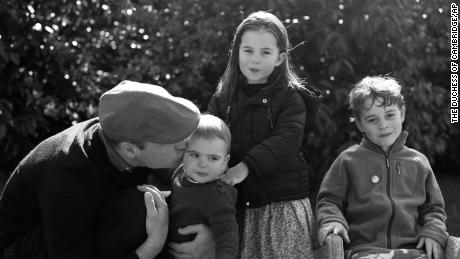
The black and white photograph shows Prince William in a flat cap, holding his youngest son, one-year-old Prince Louis, close and giving him a kiss on the cheek.
The royals posted the photograph -- taken by Kate in Norfolk earlier this year -- on their official Twitter account Wednesday with the caption: "Merry Christmas to all our followers!"
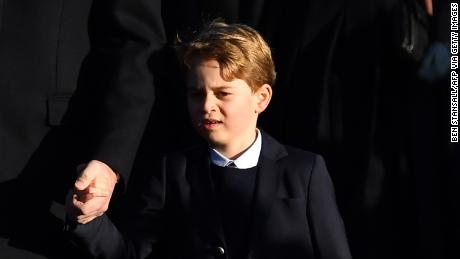
It also shows a smiling Prince George, 6, sitting in a chair next to his dad and brother, while his sister, four-year-old Princess Charlotte stands behind.
The Cambridge's two eldest children were expected to attend the royal's annual Christmas day church service at Sandringham for the first time on Wednesday.
This is not the first time Kate has shared her own family photographs with the world.
Earlier this week, William's brother Harry released his first family Christmas card featuring his wife, Meghan and baby Archie. The adorable eight-month-old tot was seen front and center, staring into the camera.
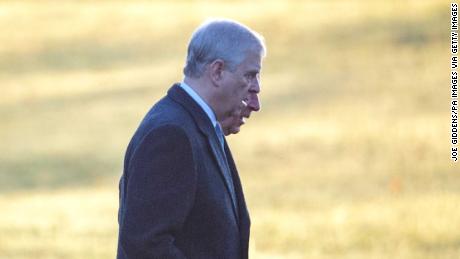
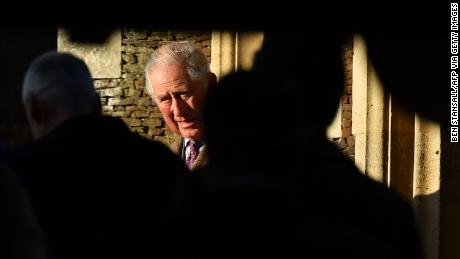
The 59-year-old -- who is also known as the Duke of York -- walked to St. Mary Magdalene Church alongside his older brother, Prince Charles.
Andrew has kept a low profile since his withdrawal from public life last month following a disastrous BBC interview about his friendship with sex offender Jeffrey Epstein. The disgraced financier died by suicide in August.
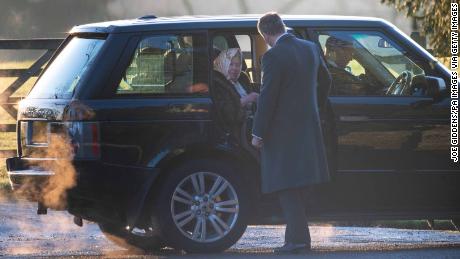
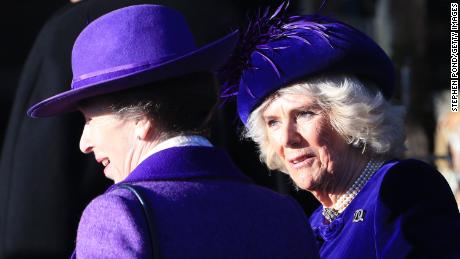
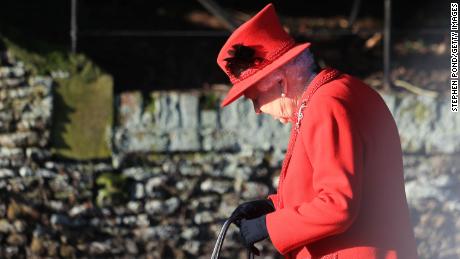
A short time later, Queen Elizabeth II and Camilla, the Duchess of Cornwall, were seen arriving by car to a second public Christmas day service. The 93-year-old monarch traditionally spends the festive season with members of the royal family at Sandringham, her country estate in rural Norfolk, about 100 miles north of London.
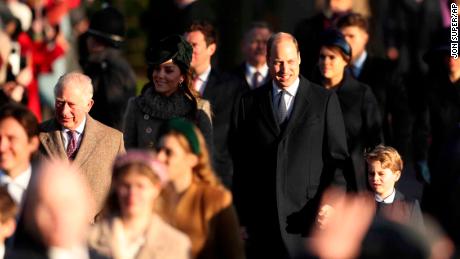
The pair were met by the Queen's daughter, Princess Anne, at the gate of the church. The Queen's youngest son, Prince Edward, also attended, as did Prince William and his wife, Kate and two of their children, George and Charlotte.
Princess Beatrice also attended the service, appearing shortly after her father, Prince Andrew, was spotted with Prince Charles attending the earlier private family service.
Two royals who were not in attendance for the royal Christmas tradition were the Duke and Duchess of Sussex, who have been spending family time in Canada. "They are enjoying sharing the warmth of the Canadian people and the beauty of the landscape with their young son," the spokesperson added.
The decision to base themselves in Canada reflected the importance of the Commonwealth country to them both, a spokesperson for the Sussexes previously told CNN.
Before joining the royal family, Meghan lived in Canada while she starred in legal drama "Suits," which was filmed in Toronto.
Later on Wednesday, the Queen will use her annual Christmas broadcast to reflect on the last 12 months, which she will describe as "quite bumpy."
In the message -- which was pre-recorded in the Green Drawing Room at Windsor Castle -- the monarch will say that the path "is not always smooth, and may at times this year have felt quite bumpy, but small steps can make a world of difference."
Greta Gerwig makes no secret of her love for “Little Women.”
The acclaimed filmmaker behind 2017’s “Lady Bird” (and now the newest in a line of adaptations of Louisa May Alcott’s beloved novel) was recently speaking in front of a British audience, according to The Hollywood Reporter. Gerwig joked that while there are many great British novels, Americans “have just two: ‘Little Women’ and ‘Moby Dick.’”
She added, “And I wasn’t interested in making ‘Moby Dick.’”
Gerwig’s adaptation of “Little Women” — of which she is both director and screenwriter — debuts in theaters Dec. 25, but it has been generating buzz for months. Early reviews have hailed it as a “new classic,” while others are calling it “cinema’s greatest ‘Little Women.’”
This is high praise, considering that Gerwig’s film is the seventh cinematic adaptation of “Little Women” since 1917. This doesn’t include television and stage adaptations — of which there are several. Two of these adaptations were released as recently as 2018.
Perhaps it’s no surprise that “Little Women” has retained its popularity, even 150 years after the novel was first published. The book was a hit from the beginning, a bestseller that spawned multiple sequels and turned Alcott into a celebrity nearly overnight.
Alcott was “an industry unto herself within American publishing,” according to Mark Gallagher, a doctoral candidate at UCLA who will be co-chairing a panel for the Louisa May Alcott Society at next year’s American Literature Association Conference.
And according to a recent article from Vulture, in a time before superheroes and Jedi, “Little Women” was “the original super-franchise.”
The story of four sisters growing up in the aftermath of the Civil War has captivated readers and movie audiences alike for well over a century. What is it that has kept “Little Women” alive for so long? And, as Gerwig’s latest iteration joins the “franchise,” will the story continue to hold its power over new generations of audiences?
‘Not a bit sensational, but simple and true’
Alcott did not intend to write “Little Women.” In fact, the only reason she wrote it was due to heavy pressure from a publisher, Thomas Niles, who wanted her to write a “girls’ story.”
“Never liked girls, or knew many, except my sisters,” Alcott wrote in her journal after Niles approached her, according to The New Yorker.
However, the Alcott family was in need of money, and so in 1868, despite her skepticism, she plunged ahead with the novel that would become the first half of what we know now as “Little Women.”
Saoirse Ronan, Laura Dern, Eliza Scanlen, Florence Pugh and Emma Watson in Greta Gerwig’s “Little Women.”
Wilson Webb/Columbia Pictures
The book quickly took off far beyond her expectations. Its first run of 2,000 published copies sold out within a matter of weeks, and Alcott became an instant celebrity.
“People begin to come and stare at the Alcotts,” she wrote in her journal, the year she published the sequel to “Little Women” (now included in the original novel as “Part Two”), according to Vanity Fair. “Reporters haunt the place to look at the authoress, who dodges into the woods.”
Alcott grew up as one of four girls, and so both the characters and events of the novel are largely drawn from her childhood experiences. She later wrote of “Little Women,” according to Vanity Fair: “It reads better than I expected. Not a bit sensational, but simple and true.”
“Sensational” stories were all the rage at the time that “Little Women” was written. In fact, Alcott wrote many such stories herself — gothic romances with titles like “Pauline’s Passion and Punishment” and “A Long Fatal Love Chase,” though she published them under a pseudonym.
But “Little Women” was something different.
Stories written for and about girls prior to “Little Women” were often sensationalized or overly sentimental. The story of the March sisters, however, had a sense of realism.
“Beneath the iconic tableau of the March sisters huddled around their Marmee, there is the threat of poverty and the violence of war,” Gallagher said. “These anxieties are pushed to the background. What the girls struggle with the most are themselves.”
The central themes of the book include “the ways that the girls learn from each other to turn their personal vices into virtues,” Gallagher said, “as well as the redeeming love of family and the desire for freedom pitted against one’s duties and responsibilities, particularly those placed on women.
“These are universal themes.”
‘A different model’ for girls
“Little Women” is, in many ways, a coming of age story — the novel begins when the girls are in their adolescence and continues into adulthood, marriage and motherhood. But just as “Little Women” was different from some of the books that came before it, it has remained different from many books that have come after it.
During the 20th century, novels for and about girls changed from the model of “Little Women” and other 19th-century books, according to Julie Pfeiffer, a professor of English at Hollins University and the author of a forthcoming book about adolescent girls’ fiction in the 19th century.
“In the 20th century, we kind of got stuck in this mode of seeing adolescence as a time of alienation, conflict with adults, self-doubt, mental disorders — this kind of sense that being an adolescent girl is horrible,” Pfeiffer said.
But novels like “Little Women” provide a different view of what being a girl could be. Though the March sisters each have their own challenges and struggles throughout the course of the story, the girls are able to lean not only on each other, but their mother and wider community for strength and support.
Part of the message of “Little Women” is that adolescence “is a special time,” said Pfeiffer. “Yes, it’s a time of transition, but it’s a time when the women and girls around you are going to support you in ways that allow you to become the person you want to be.”
The novel has stayed relevant into the 21st century in part because of the way that it promotes this message of support and community.
“We want something different,” Pfeiffer explained of modern readers. “We want to have something to offer adolescent girls that isn’t just ‘adolescence is pain.’”
But of course, this isn’t just a message that’s relevant to girls, and despite its title, “Little Women” is able to tap into that as well, according to Greg Eiselein, a professor of English and a University Distinguished Teaching Scholar at Kansas State University.
The female characters of “Little Women” struggle with questions like, “What am I going to do with my career? What am I going to do when I grow up? I have these talents and interests — how can I develop them?” said Eiselein, adding, “Those are concerns of boys and young men just as much as girls.”
‘Jo March was my North Star’
“It is doubtful whether any novel has been more important to America’s female writers than Louisa May Alcott’s ‘Little Women,’” The New Yorker wrote in commemoration of the novel’s 150th anniversary in 2018, and there is certainly a large number of writers — women in particular — that have claimed “Little Women” as an influence.
The novel’s influence on female authors can be largely attributed to just one character: the aspiring writer, Jo.
”As a girl who wanted to be a writer, Jo March was my North Star,” said Gerwig at a screening of “Little Women” earlier this year, according to The Hollywood Reporter.
But Jo’s influence extends to a wide range of women authors over the decades, from Patti Smith to Hillary Clinton to Simone de Beauvoir.
For example, Barbara Kingsolver, author of “The Poisonwood Bible,” once said, “I, personally, am Jo March,” and “Harry Potter” author J.K. Rowling has called Jo her “favorite literary heroine,” telling The New York Times that “it is hard to overstate what she meant to a small, plain girl called Jo, who had a hot temper and a burning ambition to be a writer.”
The ability to relate to the characters is another factor in “Little Women” staying relevant, according to Eiselein.
“The novel invites readers to identify with the characters and to see themselves,” Eiselein said, explaining that it “makes people want to relive the story — reread it, and watch and rewatch movie and play versions.”
Of course, there are three other March sisters, and Jo is not the only character that readers identify with.
“Different March sisters have found their moments in different eras,” said Anne Phillips, an English professor at Kansas State University and president of the Louisa May Alcott Society.
For example, Meg’s life of simple domesticity was seen as something to aspire to in earlier generations of readers, while in the 1980s, some scholars hailed Amy and her determination to go after what she wants as the feminist ideal.
However, Phillips says she believes that a different sister has come to the forefront in the 21st century: Beth.
“Her experiences speak to ideas of social anxiety and mental health care,” Phillips explained, which makes her character relatable to a whole new generation of readers.
Will ‘Little Women’ survive the next 150 years?
Stories like “Little Women” can be points of connection between people, and connection is something that many modern readers are longing for, Pfeiffer suggests.
Modern technology might be a culprit. It is useful in many ways, “but it doesn’t fulfill all of our needs,” Pfeiffer says. “It can lead to a sense of alienation. It can mean that we’re not sitting around the fire with family or friends and talking to each other.”
One of the reasons that “Little Women” remains appealing today is because of that sense of connection and community that the characters have. Of course, it’s not something that comes naturally to the characters — sometimes the March sisters have to work hard to build and maintain those connections with each other.
A well-known scene from “Little Women” follows a fight between Jo and Amy, and Amy proceeds to burn a manuscript of a story that Jo had been writing — a scene that Pfeiffer calls “one of the most painful moments in literary history.”
But the scene also shows how the sisters move past their anger and challenges with each other to maintain their relationship.
The book encourages keeping connections with each other, even when it’s difficult — an important thing for readers and viewers to remember in a society where technology can sometimes be isolating.
“It can be really hard work, but there’s this idea that we figure out how to get along with each other, and that our relationships are more important than the challenges that show up in them,” says Pfeiffer. “That it’s worth investing in each other. And I think that’s a pretty powerful message.”
Actor Kevin Spacey released a new Christmas video invoking his "House of Cards" character, Frank Underwood, in which he said he had a "pretty good year" and asked for "kindness."
The actor has since 2017 faced multiple sexual-assault allegations, all of which he has denied. Earlier this year one of his accusers dropped a civil suit against him, but the criminal charges remain.
Last year Spacey also released a holiday video that alluded to his ongoing allegations.
Kevin Spacey has released a chilling Christmas video as his "House of Cards" character, and appeared to ask for "kindness" amid a series of sexual-assault allegations leveled against him.
In a minute-long video posted on YouTube on Christmas Eve, the actor said in the voice of his character Frank Underwood: "You didn't really think I was going to miss the opportunity to wish you a Merry Christmas, did you?"
"It's been a pretty good year, and I'm grateful to have my health back," Spacey said.
He was fired from Netflix's "House of Cards" in 2017 after a series of sexual-assault allegations against the actor, and his character was killed off in the final season.
He has denied all allegations against him. Earlier this year a man accusing Spacey of groping him without consent when he was 18 years old dropped a civil suit against the actor, but the criminal charges against him remain.
Actor Kevin Spacey stands in district court during arraignment on a charge of indecent assault and battery on Monday, Jan. 7, 2019, in Nantucket, Mass. The Oscar-winning actor is accused of groping the teenage son of a former Boston TV anchor in 2016 in the crowded bar at the Club Car in Nantucket.
(Nicole Harnishfeger/The Inquirer and Mirror via AP, Pool)
Spacey also alluded to the upcoming US presidential election in 2020, saying: "As we walk into 2020, I want to cast my vote for more good in this world."
"Ah yes, I know what you're thinking: Can he be serious?" he said. "I'm dead serious."
"The next time someone does something you don't like, you can go on the attack," he said. "But you can also hold your fire and do the unexpected: you can kill them with kindness."
Watch Spacey's video here:
This is the second time Spacey has released videos that alluded to his ongoing allegations.
In a monologue delivered over a kitchen sink, released last Christmas Eve, he said: "You wouldn't believe the worst without evidence, would you? You wouldn't rush to judgment without facts, would you?"
"If I didn't pay the price for the things we both know I did, I'm certainly not going to pay the price for the things I didn't do," he added.
Justin Bieber has announced a huge North American tour for spring and summer 2020, along with his first solo music since 2015’s Purpose. His new single, out January 3, is called “Yummy,” and there’s a new album coming next year too. Watch the trailer—which includes details of a forthcoming docuseries—below. Find the tour dates across two pages starting at the 38-second mark.
Since dropping Purpose, Justin Bieber has released singles with BloodPop® (“Friends”), Ed Sheeran (“I Don’t Care”), Billie Eilish (the “bad guy” remix), and Dan + Shay (“10,000 Hours”).



:format(webp):no_upscale()/cdn.vox-cdn.com/uploads/chorus_asset/file/19545937/Little_Womnne_2_.jpg)